Rome NY: Early Strategic Infrastructure and Fortification
The construction of Fort Stanwix marked Rome's emergence as a strategic stronghold. This chapter explores its role in colonial conflicts, the pivotal Siege of 1777, and its function as a center for diplomacy, shaping the future of the nation.
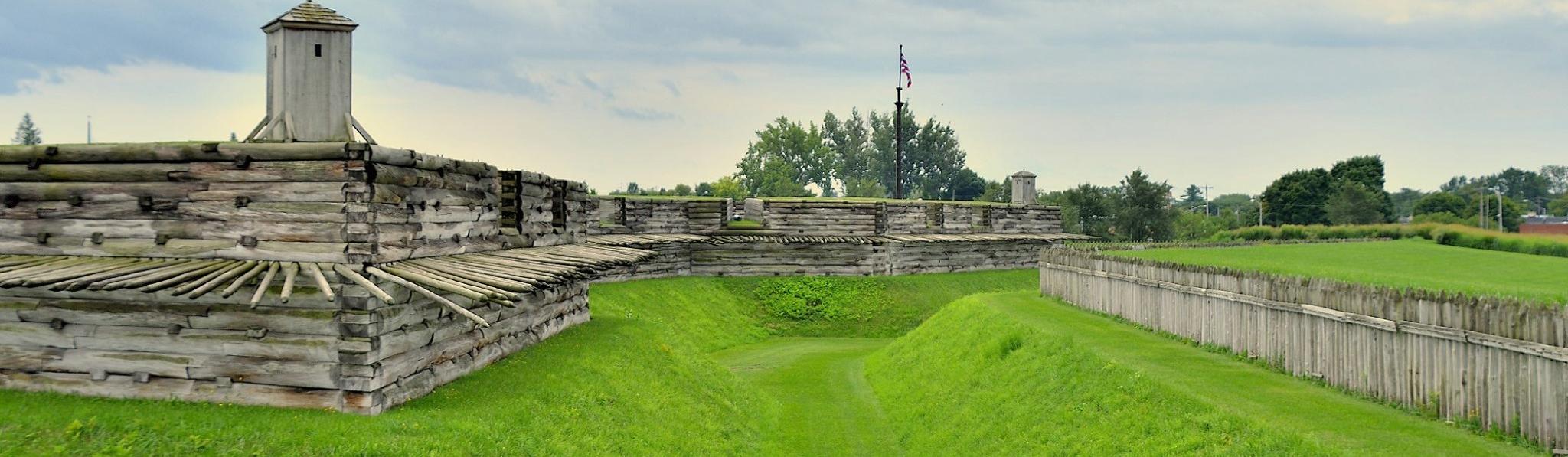
####"The fort became a symbol of the resilience of local forces and their ability to shape the course of the conflict."
In the mid-eighteenth century, the corridor of land known as the Oneida Carrying Place grew in military importance. This vital link, connecting the Mohawk River’s eastward flow to the westward reach of Wood Creek, was a natural crossroads for travel and trade. Its strategic value was clear to European powers seeking to control access between the Atlantic coast and the vast Great Lakes. To secure this passage, the British began constructing a fort in 1755. This initial effort was part of a broader strategy to defend against French influence during the French and Indian War. The fort, later named Fort Stanwix, was built to be a formidable earthwork fortification. It functioned as a critical supply depot and a powerful symbol of British authority, reinforcing their claims in the interior of North America.
The fort’s role extended beyond military might. In 1768, it became a center for diplomacy. Representatives of the British Crown, led by Sir William Johnson, the Superintendent of Indian Affairs, met with leaders of the Haudenosaunee Confederacy. This council resulted in the Treaty of Fort Stanwix, an agreement that established a new, formal boundary line between colonial lands and Indigenous territories. The treaty was a significant moment, redefining territorial arrangements and influencing the course of settlement across the region.
With the outbreak of the American Revolution, Fort Stanwix found a new purpose. American forces, recognizing its enduring strategic importance, occupied the fort. Colonel Peter Gansevoort and his second-in-command, Lieutenant Colonel Marinus Willett, were tasked with its defense. They worked to strengthen its walls, preparing for the conflict to come. The fort became a key outpost in the Mohawk Valley, a center for local defense and a crucial link in the American supply chain. Leaders like Willett played a prominent role in coordinating resistance and protecting the frontier.
The fort’s most defining moment arrived in August 1777. A British army, led by Brigadier General Barry St. Leger, laid siege to the fort, intending to capture it and proceed to Albany as part of a larger campaign to divide the colonies. Inside, Colonel Gansevoort and the garrison mounted a determined defense, refusing to surrender. The siege lasted for 21 days, a period of intense conflict and strategic maneuvering. As a relief force of American militia under General Nicholas Herkimer approached, they were ambushed at the Battle of Oriskany. While the battle was a brutal and costly encounter for the militia, it had a significant impact on the siege. Hearing the sounds of the battle, Marinus Willett led a daring sortie from the fort, raiding the nearly deserted enemy camp. His men seized valuable supplies and captured British flags, a significant blow to the morale of the besieging force.
The siege was ultimately broken by the approach of a second American relief force led by Major General Benedict Arnold, who cleverly used disinformation to make his army appear much larger than it was. The successful defense of Fort Stanwix was a pivotal victory for the American cause. It halted the British advance from the west and contributed directly to the larger American success at Saratoga, a turning point in the Revolutionary War. The fort became a symbol of the resilience of local forces and their ability to shape the course of the conflict.
After the war, the region continued to be significant. General Friedrich Wilhelm von Steuben, the Prussian officer whose training had been so vital to the Continental Army, was awarded a large land grant in the Mohawk Valley for his service. He built a home there, living out his years in the shadow of the fort he had helped to secure. His presence, along with the enduring legacy of the fort itself, served as a constant reminder of the area’s profound contribution to the founding of the United States.
Thoughts for Insight
- The construction of Fort Stanwix confirmed the strategic importance of the Oneida Carrying Place as a military and logistical anchor.
- The fort served as a center for diplomacy, as seen in the 1768 treaty that redefined territorial boundaries.
- The successful defense of the fort during the 1777 siege was a pivotal moment in the Revolutionary War, contributing to the American victory at Saratoga.
- The actions of leaders like Gansevoort, Willett, and Herkimer demonstrate the significant role of local forces in achieving national objectives.
- The fort’s legacy continued after the war, with figures like General von Steuben connecting the area to the new nation’s military heritage.