Housing Solution for Homeless: Overriding the Valuation Trap
The housing market requires scarcity to build asset wealth. The federal Material Dignity Implementation bypasses the market by placing factory-built, single-occupancy homes directly onto volunteer properties.
Introduction: The Unbroken Protocol of Abundance
The supermarket never runs out of food. The pharmacy never runs out of medicine. The clothing outlet never runs out of fabric. The modern economy produces abundance through a continuous feedback loop. A shelf empties. A sensor logs the transaction. A warehouse dispatches a replacement. The factory increases output before the customer observes the void. The industrial supply chain maintains permanent surplus capacity. Scarcity is structurally prevented by producing more material than the immediate demand requires.
Housing represents the sole necessity excluded from this arithmetic. The market excluded housing deliberately. The post-war economy transformed housing into the primary engine for household wealth. A house serves as both a physical shelter and a financial asset. These two identities enforce contradictory goals. A shelter must remain cheap to serve the population. An asset must become expensive to build wealth. The market chose the asset.
The Calculus of the Valuation Trap
Producing enough housing to satisfy human demand guarantees an immediate drop in property values. Scarcity generates the profit margin. Homeowners protect their net worth by voting against new construction. Corporate landlords maximize returns by keeping units scarce and raising rent targets. Municipalities fund civic operations by capturing property taxes on inflated land assessments. Every actor controlling the housing supply requires housing to remain scarce. The market operates precisely as constructed. The market produces scarcity.
Cash interventions fail because they ignore this mechanical boundary. Distributing cash to renters gives them purchasing power. Renters carry that power into a market structurally restricted from expanding. The cash drives up the immediate rent ceiling. The landlord captures the federal subsidy. The total housing supply remains stalled.
The Mechanical Failure of the Current Shelter System
The incumbent system manages the fallout of the valuation trap without attempting to override the market rules. The system builds centralized emergency shelters. These buildings warehouse hundreds of vulnerable individuals in service corridors far removed from stable employment centers. The federal intervention concentrates trauma in a single zip code. Routine civic surveillance replaces normal neighborhood accountability.
Physical survival absorbs all available human energy. An individual occupying an emergency bed faces constant sensory bombardment. Sleep becomes scarce. Property theft remains normalized. The environment prevents the restoration of a baseline autonomous state. The failure rate is absolute. Emergency shelters maintain retention rates below forty percent. The American taxpayer spends up to sixty-five thousand dollars per person annually to fund an architectural structure that accelerates human deterioration. The system burns more capital every subsequent year to produce the exact same level of failure.
The Physiological Precondition
The public concludes an unhoused individual fails to secure employment due to a lack of willpower. Absolute physical capability dictates a different reality. The absence of routine hygiene blocks the doorway to economic participation. Employers discard applicants lacking clean clothing. Employers detect the scent of street exposure and reject the candidate automatically. Corporations enforce these standards as unyielding institutional rules.
The lack of shower access triggers internal devastation. The individual experiences total social alienation. Shame prevents the unhoused person from entering a storefront or boarding a bus. The psychological withdrawal compounds daily. Placing this individual in a residential unit isolates the person but does not erase the psychological damage. The hygiene deficit must find resolution before the housing placement occurs. Restoring physical cleanliness eliminates the primary barrier to employment. Reversing the shame cascade requires immediate access to a public shower facility.
The National Stability Utility
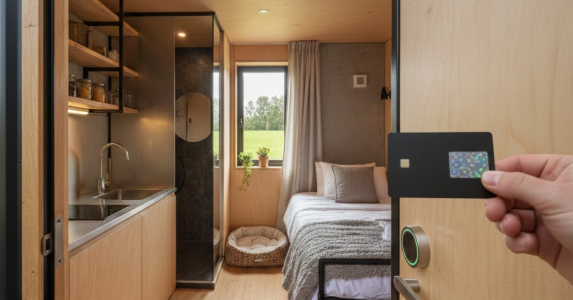
Resolving the housing crisis requires building a secondary system outside the commercial real estate market. The National Stability Utility operates as a direct federal response. The federal government bypasses the valuation trap. The government purchases factory-built, single-occupancy homes. These units total one hundred and twenty square feet. The structures contain a bed, a desk, internal climate control, and structural integrity suited for ten years of heavy deployment.
The government retains total ownership of the physical unit. The property never enters the private asset market. The government deploys the unit onto the private land of a volunteer property owner. The system distributes the units across stable, historically quiet residential neighborhoods. One unit arrives per fifty existing homes. The unhoused individual moves into a functioning community. Natural neighborhood connection replaces institutional surveillance.
The Mechanism of the YIMBY Inversion
Neighborhoods universally reject high-density shelter construction. Homeowners view centralized shelters as threats to safety and property values. The proposed system reverses this dynamic. The program pays the volunteer property owner a direct monthly federal tax credit. The credit matches the median rent of the local area. The property owner guarantees zero physical maintenance.
The federal government carries all legal liability. If an accident occurs inside the unit, the volunteer is shielded. If the individual breaks the law, the volunteer holds zero risk. If the arrangement fails, the owner executes a sixty-day notice. The federal government physically removes the unit from the lot. The risk profile drops to zero. The property owner gains a guaranteed tax reduction. The local neighborhood resistance curve collapses.
The Sensor Pipeline and the Enforcement Code
The current institutional grant system operates in total darkness. Agencies distribute billions of dollars to localized charities. No federal dashboard confirms if the charity housed a single individual. The National Stability Utility installs five physical sensors inside every unit. The sensors monitor the door opening, the temperature regulation, the smoke detector, the utility draw, and the structural seal.
The dashboard registers the physical status in real time. The government knows if the unit is safe and occupied. The system eliminates paperwork fraud instantly. No cameras exist. The government enforces the absolute absence of physical surveillance. The unit provides security without imposing a warden.
The Prerequisite Sequence
The system demands a strict behavioral entry point. The unhoused individual must use a localized public hygiene center three times a week. The federal database logs this physical use. The database matches the highest frequency users with the highest priority housing slots. No caseworker makes a subjective judgment call. No board dictates who deserves rescue. The individual demonstrates the capacity to engage with infrastructure. The system allocates the reward.
The Capital Engine
The federal government requires a stable funding structure immune to the annual congressional budget battle. The program deploys a functional bond model proven during the nineteen thirties. The government issues sovereign bonds directly to the industrial manufacturing baseline. The government funds the factory production lines directly. The volume scales strictly on the physical success metrics. The pilot phase requires an eighty-five percent retention rate. The pilot must lower the taxpayer burden by ten thousand dollars per person compared to the incumbent disaster. Striking these exact numbers releases the next round of bond funding.
The system scales on audited numbers. The architecture ignores moral campaigning. The physical delivery of a safe operational environment costs twenty thousand dollars per person. The status quo wastes three times that amount to process the unhoused individual through emergency rooms, county jails, and failed shelter beds.
Conclusion
The United States requires an industrial housing solution. The system requires separating the human need for shelter from the speculative real estate market. The Material Dignity Implementation achieves this outcome by coordinating federal capital, factory manufacturing, and distributed private land. The resulting infrastructure bridges the gap between chronic street exposure and market-rate independence.
The reference manual below translates the operational rules of this new infrastructure. It provides strict guidelines for the resident, the private property host, the local municipal authority, the federal executive, the supportive charity, and the industrial manufacturer. It details exactly how the intervention executes.
FAQ: Material Dignity Implementation
The Resident
Q: How do I get a unit, and who decides?
You qualify by using a local public shower and laundry center at least three times a week. The federal government tracks this physical use and automatically offers you a unit when one opens. No caseworker makes a subjective choice about your eligibility.
Q: What are the rules inside the unit, and is someone watching me?
The unit uses automatic sensors reading temperature, smoke, power use, and the door opening to ensure you are safe and the building works. No cameras or tracking devices exist. The government only checks that the unit is occupied and functioning.
Q: How long can I stay?
You stay as long as you need. You retain the unit by following local laws and keeping the space safe.
Q: What happens if I have a problem with the property owner?
The federal program handles all disputes. If you and the owner cannot resolve the conflict, the program permanently moves your unit to a new location. You do not lose your housing.
The Host (Property Owner)
Q: Can I be sued if the resident gets hurt or breaks the law on my property?
No. The federal government carries all legal liability. You hold zero risk of a lawsuit related to the resident or the unit.
Q: Do I get paid for hosting a unit?
Yes. You receive a direct federal tax credit every month. This lowers your federal tax bill. The credit amount matches the standard rent value for your local area.
Q: How do I back out if this does not work?
You give a 60-day notice. The federal government physically removes the unit from your property within that time. Your tax credit stops when the unit leaves.
The Local Authority
Q: Can the federal government override our local zoning laws to place these units?
State governments agree to suspend specific local zoning rules in exchange for federal funding. If your state accepts the money, the local rules blocking the units are lifted.
Q: Does the city pay for the extra water and power these units use?
No. The federal government pays all maintenance and utility costs directly. The city pays nothing to support the units.
Q: If the program shuts down, does the city have to take over the housing?
No. If the program ends, the federal government removes the units and relocates the residents. The city holds no future financial responsibility.
The Administrator (Federal Executive)
Q: How does the government fund this without fighting over the annual budget?
The program issues its own federal bonds, similar to how major infrastructure scales. This action removes the program from yearly congressional budget battles.
Q: What proves the pilot works before we expand it nationally?
The pilot must keep 85 percent of residents housed and save taxpayers at least $10,000 per person compared to the current system. Hitting these two exact numbers unlocks the money for expansion.
Q: How does the government know if thousands of units are occupied and safe?
Sensors report the physical status of the unit to a central dashboard in real time. If a unit loses power or sits empty, the system flags it automatically.
The Pivot (Existing Services / NGOs)
Q: Will our charity lose its current government grants?
The funding shifts to pay for physical results. Your organization secures contracts by operating the public shower facilities and managing the residents' transition into the units.
Q: What is our role in this new system?
You provide the human support. The federal government provides the real estate and the buildings. You guide the resident through the entire transition.
The Industrial Base
Q: How many units will the government buy, and over what timeline?
The government issues five-year production contracts. Volume scales automatically when the program hits its retention metrics. You lock in guaranteed long-term orders.
Q: Who pays to transport and install the units?
The federal government pays all delivery, installation, and removal costs.
Q: What must we build into these units?
The units must include five specific safety sensors and survive ten years of heavy use. You must also sign a contract to recycle the units when they reach the end of their lifespan.
The operational rules defined above execute the structural architecture designed in the primary manuscript. Access the comprehensive capital framework, sensor dashboard specifications, and sequential measurement gates below.