Alcatraz Island Federal Prison Proposal: A Fiscal Analysis
A Working Paper for the General Public and Concerned Voters
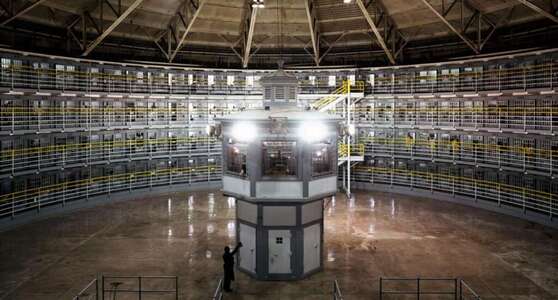
This paper examines a single question: what does the proposed reopening of Alcatraz Island as a federal prison actually cost, and how does that cost compare to documented alternatives? It does not argue for or against the policy on political or ideological grounds. It presents verified figures from government sources, independent construction data, and institutional records, and it draws only the conclusions that those figures support. Where estimates are used, the basis for each estimate is stated explicitly and the margin of uncertainty acknowledged. The reader is left to form their own judgment.
All dollar figures are in 2025–2026 United States dollars unless otherwise noted. All sources are cited in the appendix.
Part 1 — Historical Record: Why Alcatraz Closed
1.1 The Original Decision
Alcatraz Federal Penitentiary operated from August 1934 to March 21, 1963 for a period of 29 years. It was not closed because it failed as a prison. It was closed because the federal government determined, through its own accounting, that continuing to operate it was financially indefensible.
The Bureau of Prisons states on its own website: "Alcatraz was nearly 3 times more expensive to operate than any other Federal prison. The major expense was caused by the physical isolation of the island." In 1959, the daily cost per prisoner at Alcatraz was $10.10, compared to $3.00 at comparable mainland institutions such as the federal penitentiary in Atlanta. The ratio was 3.37 to 1.
The reason was not inefficiency in management. It was geography. The island sits 1.25 miles off the coast of San Francisco in the middle of San Francisco Bay. It has no source of fresh water. It has no road access. It has no functioning sewage system as in the original prison era, waste was discharged directly into the bay. It has no independent power supply. Every item required to sustain life on the island, food, fuel, water, medical supplies, personnel, all had to arrive by boat.
The Bureau of Prisons recorded that nearly one million gallons of fresh water were barged to the island every week. By 1962, ahead of the final closure decision, engineers had assessed the structural condition of the buildings and found that the salt air and ocean spray had severely corroded the steel reinforcement within the concrete walls. The cost of restoration and maintenance at that point not including daily operations, was estimated at $3 to $5 million in 1963 dollars. Adjusted for inflation to 2025, that figure is approximately $30 to $50 million, and that was simply to keep the building standing, not to modernize it for contemporary prison standards.
Attorney General Robert F. Kennedy formally closed the facility on March 21, 1963.
1.2 The Prison's Scale
It is important to establish precisely what scale of facility is under discussion. The Alcatraz cellhouse was built for a maximum of 336 inmates. According to Bureau of Prisons records, the average daily population during the prison's entire 29-year operation was between 260 and 275 prisoners. The facility never once reached its maximum capacity. At any given time, the Bureau of Prisons notes, Alcatraz held less than one percent of the total federal prison population.
The total number of prisoners who passed through Alcatraz in its entire 29-year history was approximately 1,545.
1.3 What the Island Became
In 1972, Congress established the Golden Gate National Recreation Area and transferred Alcatraz to the National Park Service. The island opened to the public in 1973. It was listed on the National Register of Historic Places in 1976 and designated a National Historic Landmark in 1986, the highest federal recognition available to a historic site. That designation carries legal preservation obligations.
Today, according to the National Park Service, the island receives approximately 1.6 million visitors annually and generates roughly $60 million per year in revenue for park operations and partners. The broader Golden Gate National Recreation Area, of which Alcatraz is a central component, generated an estimated $2 billion in economic activity in 2023 and supported more than 13,000 jobs in the surrounding region.
Part 2 — Current Physical Condition of the Island
2.1 Structural Integrity
The main cellhouse on Alcatraz was constructed between 1909 and 1912. It is among the earliest reinforced concrete structures in the San Francisco Bay Area. Engineers and materials scientists from Wiss, Janney, Elstner Associates (WJE), contracted by the National Park Service, conducted a formal structural condition assessment of the cellhouse and found it to be, in their documented characterization, "extremely vulnerable to earthquake damage and the corrosive effects of salty sea air."
The mechanism of deterioration is documented and well understood. Airborne chlorides from the bay deposit onto exposed concrete surfaces. Over decades, those chlorides penetrate through the concrete to the embedded steel reinforcing bars. Once the chlorides reach the steel, they break down the protective oxide layer on the rebar, initiating corrosion. Corroding steel expands in volume as it oxidizes. The expansion creates internal pressure within the concrete, causing it to crack. Once cracked, more chloride and water enter, accelerating the process. Carbon dioxide in the atmosphere simultaneously carbonates the concrete over time, further reducing its pH and removing the chemical protection that normally keeps embedded steel from corroding.
The National Park Service, in its own documentation, describes this process as having caused deterioration and corrosion of building materials throughout Alcatraz. In the Quartermaster Warehouse, restoration contractors found that by 2010, exposed corroding steel reinforcement was visible at cracks and spalls on exterior walls, beams, columns, and floor slabs. This was in a building that had received some maintenance attention. The cellhouse, the primary structure, was assessed as requiring seismic upgrade in addition to corrosion remediation, a significantly more complex and costly undertaking.
Since 2011, the National Park Service has invested in a series of rehabilitation projects on the island: seismic upgrades, slope stabilization, wall rehabilitation, and wharf repair. A $40 million wharf rehabilitation project was completed in late 2025 to repair the 1939 concrete dock, the only landing point for boats accessing the island. This project was funded specifically to ensure that the $60 million annual tourism revenue stream could continue.
None of these investments were designed to prepare the island for use as a prison. They were preservation investments for a tourist and heritage site. Converting the facility to an active maximum-security prison would require an entirely different and far more extensive category of intervention.
2.2 Infrastructure That Does Not Exist
To function as a prison in 2026, Alcatraz would require the following infrastructure, none of which currently exists in operable form:
Fresh water supply. The island has no natural water source. In the original prison era, approximately one million gallons per week were barged from the mainland. A modern prison of even 336 inmates, including staff housing and operational needs, would require a reliable daily water supply. Options include a submarine pipeline from the mainland, a desalination plant on the island, or continued barge delivery. Each carries significant capital and ongoing operational cost.
Sewage treatment. In the original prison era, waste was discharged directly into San Francisco Bay, a practice that would be illegal under the Clean Water Act and California environmental law today. A functional sewage treatment system would need to be built from scratch. The island's geology, which is predominantly sandstone and seismically active, complicates underground installation.
Electrical power. The island currently generates some power through solar panels installed by the National Park Service in 2011, sufficient for tourist operations. A 24-hour maximum-security prison requires reliable, redundant power for electronic security systems, lighting, climate control, medical equipment, communications, and facilities operations. The current system is wholly inadequate for this purpose.
Modern security systems. The original prison's security model relied primarily on geographic isolation and the cold, fast-moving currents of the bay. Contemporary maximum-security federal prisons operate comprehensive electronic surveillance, biometric access control, communications monitoring, and remote-operated locking systems. None of this exists on Alcatraz.
Staff facilities. In the original era, correctional officers and their families lived on the island, a practice that is not compatible with modern federal employment standards or labor agreements. Staff would commute daily by ferry, requiring a maintained ferry operation and scheduling infrastructure separate from supply logistics.
Medical facilities. Federal prisons are constitutionally required to provide medical care under the Eighth Amendment (Estelle v. Gamble, 1976). A prison housing the federal system's most dangerous offenders would require on-site medical capacity. Any emergency requiring hospital-level care would require helicopter or boat transport to the mainland, a logistical and liability complication that no mainland prison faces.
2.3 Seismic Risk
Alcatraz Island lies in one of the most seismically active regions of the United States. San Francisco Bay and the surrounding area sit above a network of active fault systems. The main cellhouse is a century-old reinforced concrete structure that, by the professional assessment of structural engineers contracted by the National Park Service, is extremely vulnerable to earthquake damage. Engineers have performed seismic upgrades as part of the broader rehabilitation effort, but those upgrades were designed for a tourist site operating during daylight hours with controlled visitor numbers, not a 24-hour occupied security facility with 336 prisoners and full staff.
Building a new maximum-security prison to contemporary seismic standards on this island would require either full demolition and reconstruction of existing structures, or new construction on the 22-acre island footprint that must itself meet California's seismic code requirements for occupied structures. Neither option is architecturally simple or inexpensive in this environment.
Part 3 — Cost Estimation: Island Renovation and Operation
3.1 What the Administration Has Disclosed
The White House's fiscal year 2027 budget proposal, released April 3, 2026, requests $152 million described as covering "the first year of project costs." The document does not disclose:
- Total project cost
- Expected completion date
- Final inmate capacity
- Annual operating cost once operational
- Staffing levels or staffing cost projections
When CNN asked the Bureau of Prisons for a total cost figure, the agency responded only that it was "moving forward, evaluating, and formulating the actions necessary to reopen and operate USP Alcatraz." The feasibility study begun in 2025 had not been completed as of the date of this paper's writing.
The administration's own officials, in 2025, indicated that the full renovation and reconstruction project could cost approximately $2 billion. This figure was referenced by California State Senator Scott Wiener and has not been disputed by the White House.
3.2 Capital Cost Estimate: What the Infrastructure Requires
The $2 billion figure is consistent with, and may be conservative relative to, what documented construction costs suggest for the specific infrastructure gaps that must be filled.
The following estimates draw on current federal construction cost data and comparable infrastructure projects. They are estimates, not bids. They are presented with their sourcing and reasoning transparent so the reader can evaluate them independently.
Structural rehabilitation and seismic upgrade of existing buildings. The National Park Service has already invested in partial seismic upgrades and concrete rehabilitation for some structures. Completing a full structural upgrade of the main cellhouse and ancillary buildings to a standard suitable for an occupied maximum-security prison, which requires a higher structural performance standard than a heritage site, would require comprehensive engineering assessment and intervention. Comparable seismic retrofit projects for large reinforced concrete structures in the San Francisco Bay Area have ranged from $50 million to over $150 million depending on scope. The Alcatraz cellhouse alone, given its documented condition and scale, is unlikely to fall below the lower end of this range. A conservative estimate for full structural remediation across all required structures: $100–200 million.
Water supply infrastructure. A submarine pipeline from the mainland to the island, carrying potable water, is the most reliable long-term solution. Marine pipeline construction in San Francisco Bay is technically complex, subject to environmental permitting, and expensive. Comparable marine infrastructure projects in California have run from $50 million to over $200 million depending on distance, depth, and regulatory requirements. An alternative desalination plant on the island would cost $20–50 million to construct and carry ongoing energy and maintenance costs. A conservative estimate for water supply: $75–150 million.
Sewage treatment. Installing a modern wastewater treatment system on a small island with sandstone geology, seismic risk, and strict environmental regulation regarding discharge into San Francisco Bay is a substantial engineering challenge. In 2023, Hawaii County allocated $125 million in bonds to upgrade a single mainland wastewater treatment plant. Island installation, with the added cost of marine discharge management or waste barge removal, would be comparably expensive. A conservative estimate: $80–150 million.
Electrical power system. A reliable, redundant power grid for a 24-hour maximum-security facility requires either a submarine cable from the mainland grid or a combination of on-island generation and storage. Marine electrical cable installation in San Francisco Bay carries similar logistical and regulatory complexity to marine pipeline installation. Estimate: $40–80 million.
Security systems. The federal supermax facility ADX Florence in Colorado, which opened in 1994, cost $60 million to build and houses approximately 380 inmates with comprehensive modern security technology. Adjusted to 2026 construction costs, roughly 1.9 times the 1994 cost based on construction price inflation, an equivalent security infrastructure installation would cost approximately $114 million. Alcatraz, with the additional complexity of island logistics and the need to retrofit security systems into century-old structures rather than build them into new construction, would be at least as expensive. Estimate: $100–150 million.
Staff facilities, ferry infrastructure, and operational support buildings. Officers and staff require secure staging areas, briefing rooms, armories, and administrative facilities. A dedicated ferry terminal with boat maintenance and scheduling infrastructure adds further cost. Estimate: $50–100 million.
Demolition, remediation, and environmental compliance. Converting a National Historic Landmark to an active prison requires navigating preservation law and environmental compliance. Some structures may need to be partially demolished and rebuilt. Asbestos, lead paint, and decades of deferred maintenance add remediation cost. Estimate: $50–100 million.
3.3 Capital Cost Summary
| Category | Conservative Estimate | |---|---| | Structural rehabilitation and seismic upgrade | $100–200 million | | Water supply infrastructure | $75–150 million | | Sewage treatment system | $80–150 million | | Electrical power system | $40–80 million | | Security systems | $100–150 million | | Staff facilities and ferry infrastructure | $50–100 million | | Demolition, remediation, environmental compliance | $50–100 million | | Total capital cost range | $495 million – $930 million |
This range does not include contingency, standard practice in large-scale construction adds 20–30% for unforeseen conditions, which on a project of this complexity in a challenging marine environment is more likely to be reached than avoided. With contingency applied, the realistic capital range is $600 million to over $1.2 billion, consistent with the $2 billion figure referenced by the administration's own officials when accounting for project financing, interest on federal borrowing, and the full multi-year construction timeline.
3.4 Annual Operating Cost Estimate
This is the figure that matters most over the long term. A capital expenditure is a one-time outlay. Operating costs recur every year, indefinitely.
The baseline. The Bureau of Prisons reports an official Cost of Incarceration Fee (COIF) for fiscal year 2024 of $47,162 per prisoner per year ($129.21 per day) which is the documented federal average across all security levels and facility types. This is the most recent official figure.
The island multiplier. The Bureau of Prisons' own historical records establish that Alcatraz cost 3.37 times more per prisoner per day to operate than the national average. In 1959, the comparison was $10.10 at Alcatraz versus $3.00 at Atlanta. That multiplier reflected the cost of supplying a fully operational facility by boat. Today, the facility must first be built from zero, and must operate in the most expensive labor market in the United States.
Applying the historical 3.37x multiplier to the 2024 federal baseline:
$47,162 × 3.37 = approximately $159,000 per prisoner per year
This is a conservative estimate because it uses the historical multiplier without adjustment for the significantly higher labor costs in the San Francisco Bay Area.
The San Francisco labor cost premium. Federal employees in the San Francisco Bay Area receive a locality pay adjustment of 46.34% above the national GS base pay scale, as set by the Office of Personnel Management for 2025–2026. This is the highest or near-highest locality adjustment in the federal government. Correctional officers and staff at an Alcatraz facility would receive San Francisco locality pay. At ADX Florence in Colorado, staff receive no equivalent adjustment. The effective labor cost difference between a Bay Area federal facility and a comparable rural mainland facility, purely on wages, exceeds 30% for equivalent positions.
Staff costs typically represent 60–70% of a prison's total annual operating budget. Applying a 30–40% labor cost premium to the largest single cost category adds materially to the annual total.
Annual ferry operating cost. Staff must commute daily. Supplies must arrive daily. Waste must be removed. A dedicated ferry operation, running multiple daily crossings for staff shifts and supply deliveries, carrying provisions for 300+ prisoners and the staff required to secure them, maintained year-round in Bay conditions, represents a cost with no mainland equivalent. Industry estimates for dedicated round-the-clock island ferry operations at this scale suggest costs exceeding $15 million per year.
Adjusted annual operating cost estimate per prisoner:
| Cost component | Estimate | |---|---| | Base federal COIF (FY2024) | $47,162/year | | Island logistics multiplier (3.37x historical) | $158,935/year | | San Francisco locality wage premium adjustment | +$20,000–$30,000/year | | Ferry operating cost allocated per prisoner (300 inmates) | +$50,000/year | | Estimated annual cost per prisoner | $228,935 – $238,935/year |
For 300 prisoners, total annual operating cost: approximately $69 million to $72 million per year.
This figure is consistent with independent estimates cited in reporting, which have placed annual Alcatraz operating costs at $70–100 million for a facility of this scale.
Part 4 — Cost Estimation: Mainland New Construction
4.1 Current Federal Prison Construction Costs
Federal prison construction costs are documented through active projects. Two examples from the current construction cycle:
Roxana, Kentucky (Federal Bureau of Prisons, in construction). A new medium-security federal prison designed to hold 1,408 inmates. Budgeted cost: approximately $500 million. Cost per bed: approximately $355,000.
South Dakota Department of Corrections, Lincoln County. A new men's correctional facility for up to 1,500 inmates. Budgeted cost: $825 million. Cost per bed: approximately $550,000.
Illinois Department of Corrections, Lincoln. Two new facilities totaling 3,000 single-cell beds. Budgeted cost: $900 million. Cost per bed: approximately $300,000.
These are state facilities. Federal facilities generally cost more per bed due to higher single-cell space allocations (federal inmates receive 55% more space per cell than state inmates, per General Accounting Office analysis) and more extensive programming infrastructure. A reasonable current federal high-security construction cost is in the range of $400,000 to $600,000 per bed, with supermax-equivalent security adding further cost.
A new 1,000-bed federal high-security facility on accessible mainland land: approximately $400–600 million in capital cost.
4.2 Annual Operating Cost: Mainland High-Security Facility
The federal FY2024 COIF of $47,162 per prisoner per year represents the average across all security levels. High-security and supermax facilities cost more. Based on available data:
- Federal average (all security levels, FY2024): $47,162/year
- High-security penitentiary (estimated from BOP security-level breakdowns): $55,000–$70,000/year
- Supermax equivalent (ADX Florence complex average, estimated): $75,000–$100,000/year
A 1,000-bed mainland high-security federal facility at $65,000 per prisoner per year: $65 million annual operating cost.
Part 5 — Direct Comparison
The following table compares the Alcatraz proposal to a documented mainland alternative on equivalent terms. The mainland scenario uses a 1,000-bed high-security federal prison as the comparison point, because that is the scale at which the fiscal difference becomes most visible to the taxpayer.
5.1 Capital Cost Comparison
| | Alcatraz (336 beds, estimated) | Mainland High-Security (1,000 beds) | |---|---|---| | Capital cost (conservative) | $600 million – $1.2 billion | $400–600 million | | Cost per bed | $1.8 million – $3.6 million | $400,000 – $600,000 | | Beds produced | 336 maximum | 1,000+ | | Revenue surrendered | $60 million/year (tourism) | None |
The capital cost per bed at Alcatraz is estimated at between 3x and 9x the cost per bed in comparable mainland construction. The Alcatraz project produces fewer than one-third the prison beds for equal or greater capital investment.
5.2 Annual Operating Cost Comparison
| | Alcatraz (300 prisoners) | Mainland (1,000 prisoners) | |---|---|---| | Annual cost per prisoner | ~$230,000 | ~$65,000 | | Total annual operating cost | ~$70 million | ~$65 million | | Prisoners served | 300 | 1,000 | | Annual revenue lost (tourism) | $60 million | $0 | | Net annual public cost | ~$130 million | ~$65 million |
The net annual public cost figure for Alcatraz includes the $60 million tourism revenue that would no longer be generated once the island is converted to a prison. This revenue currently funds park operations across the Golden Gate National Recreation Area. Its loss would require either reduced public services or replacement funding from other budget sources.
At equivalent annual expenditure, the mainland scenario houses more than three times the prisoners.
5.3 Ten-Year Total Cost of Ownership
| | Alcatraz | Mainland (1,000 beds) | |---|---|---| | Capital cost (midpoint) | $900 million | $500 million | | Annual operating cost | $70 million | $65 million | | Revenue foregone (10 years) | $600 million | $0 | | 10-year total public cost | ~$2.2 billion | ~$1.15 billion | | Prisoners served (year 10) | ~300 | ~1,000 |
Over ten years, the Alcatraz proposal costs the public approximately $2.2 billion to house approximately 300 prisoners. The mainland alternative costs approximately $1.15 billion to house approximately 1,000 prisoners. The cost per prisoner-year over a decade is approximately $7.3 million at Alcatraz versus approximately $1.15 million at a mainland facility. That is a ratio of more than 6 to 1.
Part 6 — The Fiscal Argument
6.1 What the Numbers Say
The numbers say the following, plainly:
The federal government proposes to spend an estimated $600 million to $2 billion in capital costs to create a facility capable of housing a maximum of 336 prisoners. That facility will cost an estimated three times more per prisoner per year to operate than any comparable mainland alternative, in perpetuity. It will eliminate $60 million in annual public revenue that currently supports national park operations. It faces unresolved legal obstacles requiring congressional action to transfer the property from the National Park Service and to navigate its status as a National Historic Landmark. And the Bureau of Prisons, when asked, has stated it has not completed a feasibility study, has not disclosed a total cost, and has not identified a completion date.
The federal government simultaneously owns large tracts of accessible mainland land on which it is currently building new federal prisons at documented costs of $300,000 to $600,000 per bed, with access to existing roads, water, power, and sewage, at labor costs that are 30–46% lower than San Francisco Bay Area rates.
6.2 What Information Remains Undisclosed
Congress cannot make an informed appropriations decision without the following information, none of which has been released:
- A completed feasibility study
- A total project cost estimate
- A construction timeline
- A projected annual operating cost once operational
- A projected staffing level and staffing cost
- A legal analysis of the National Historic Landmark designation and the congressional action required to transfer the property
- A plan for water, sewage, and power infrastructure with cost estimates
- A seismic assessment of existing structures relative to occupied-facility standards
The $152 million initial request is a down payment on an undisclosed total. The appropriations process normally requires disclosure of total project cost before Congress approves initial funding for major capital projects. That information has not been provided.
6.3 The Administration's Stated Rationale
The administration has been consistent in its framing. The president stated: "It represents something very strong, very powerful, in terms of law and order." The budget document describes Alcatraz as a project that "affirms the President's commitment" to prison reform and law enforcement expansion.
This is an argument about symbolic value. The claim is that housing dangerous offenders on a world-famous island sends a message to potential criminals, to the public, and to other nations that the United States takes serious crime seriously. This is a legitimate argument. Symbolic expenditures have real effects, and the administration is entitled to make this case.
The public and Congress are equally entitled to weigh that argument against the fiscal evidence presented in this paper, and to ask whether $2 billion and an annual operating premium of $165,000 per prisoner above mainland costs represents the most effective use of funds for the stated purpose of reducing crime and housing dangerous offenders.
6.4 The Core Trade-off
Taxpayers are asked to commit $152 million initially toward a project whose complete renovation cost, final capacity, and long-term annual operating burden, including the loss of $60 million in verified annual tourism revenue, remain undisclosed in official sources. Mainland construction offers documented per-bed costs and avoids the logistical premiums that contributed to the original 1963 closure.
The practical trade-off is whether proceeding with an island facility whose full fiscal details have not been released represents the most efficient use of public funds compared with documented mainland alternatives. On the evidence available, the answer is that it does not, not by a wide margin, and not on any fiscal measure applied.
The vote that matters is the congressional vote on the $152 million initial appropriation. If that funding is approved without the disclosure of a total project cost and a completed feasibility study, subsequent funding requests will be difficult to oppose on fiscal grounds, because the initial commitment will already have been made.
Every taxpayer who funds the federal government has a direct financial interest in that vote.
Appendix: Sources
All figures in this paper are drawn from the following sources. No figures have been fabricated, extrapolated without disclosure, or attributed without basis.
Federal Bureau of Prisons
- BOP official website: History of Alcatraz, operating cost data, closure rationale
- Federal Register, December 15, 2025: Annual Determination of Average Cost of Incarceration Fee (COIF), FY2024 — $47,162 per prisoner per year
White House / Office of Management and Budget
- FY2027 Budget Proposal, released April 3, 2026: $152 million Alcatraz line item
National Park Service / Department of Interior
- NPS official documentation: 1.6 million annual visitors, $60 million annual revenue
- NPS Alcatraz wharf rehabilitation project documentation: $40 million project, 2025
- Department of Interior: Golden Gate National Recreation Area economic impact, $2 billion annually, 13,000+ jobs
Office of Personnel Management
- Salary Table 2025-SF: San Francisco locality pay adjustment of 46.34%
Wiss, Janney, Elstner Associates (WJE)
- Alcatraz Cellhouse structural assessment: confirmed extreme vulnerability to seismic damage and salt air corrosion
Sika Corporation / ICRI
- Alcatraz Quartermaster Building restoration documentation: confirmed extensive chloride-induced corrosion of reinforced concrete throughout island structures
Federal prison construction cost data
- Government Market News, December 2024: Roxana, Kentucky federal prison ($500 million / 1,408 beds); South Dakota DOC ($825 million / 1,500 beds); Illinois DOC ($900 million / 3,000 beds)
ADX Florence
- Wikipedia / Bureau of Prisons: Construction cost $60 million (1994), capacity 490 beds, current population approximately 380
- Solitary Watch: Urban Institute estimate of $75,000/year average for supermax incarceration
Reporting sources consulted
- CNN, April 3, 2026: Trump seeks $152 million to reopen Alcatraz
- NPR, May 5, 2025: Trump says he will reopen Alcatraz
- NBC News, May 5, 2025: Alcatraz roadblocks analysis
- Fox Business, May 5, 2025: Alcatraz tourism revenue
- Axios San Francisco, May 7, 2025: Infrastructure analysis
- Artvoice, April 4, 2026: Legal and cost obstacles summary
- ThePricer.org, May 2025: Annual operating cost estimates ($70–75 million)
- LegalClarity.org, 2026: Federal incarceration cost breakdown
Historical cost inflation
- BOP 1959 data: $10.10/day Alcatraz vs. $3.00/day Atlanta
- USA Today / Palm Beach Post: Inflation-adjusted 1959 daily cost = approximately $111.76 in 2025 dollars (CPI calculator)
This paper was prepared using publicly available government records, documented construction cost data, and institutional assessments. It is intended as a resource for voters, journalists, and policymakers seeking a factual foundation for evaluating the fiscal dimensions of this proposal. It takes no position on questions of criminal justice policy, immigration enforcement, or the administration's broader law enforcement agenda.